Parrot interview with Laurella Desborough


Parrot interview with Laurella Desborough – by Tony Silva
In my pursuit to have highly respected aviculturists share their experience, I formulated a series of questions for them to answer. The question and answer follow. This is the first in a series of interviews. The first person interviewed is Eclectus expert Laurella Desborough.
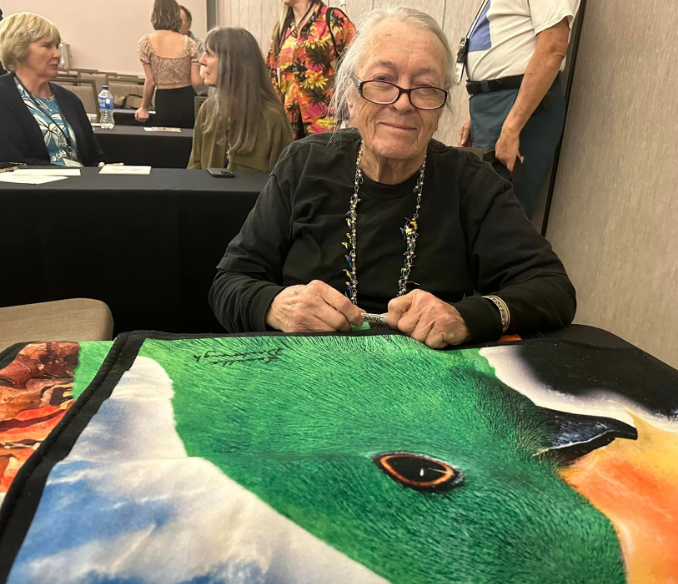
Describe for me your first encounter with birds?
As a toddler about 2 to 3 years old, my parents bought a dozen Rhode Island Red chicks and gave me the responsibility of raising them, (with guidance and oversight, naturally). I raised them all. Each year my parents did this until I reached school age. Living on a farm, I was also exposed to the many different wild birds in the Midwest, which I enjoyed observing.
Tell me what motivated you to become an aviculturist?
I have loved birds my entire life. After raising baby chickens, later I kept and raised barn pigeons. By the time I was a teenager, I had fancy pigeons and racing pigeons. In those days pigeons were ordered from another state and sent by train…and arrived at the local train station in a wooden box. My father insisted I had to build my own aviaries. So I learned how to use a hammer and a saw and nails to do this. After college when I married, I kept a small flock of racing pigeons for years. During the seventies, I read about the plight of parrots worldwide and I decided to quit my teaching job and focus on making sure that parrots did not go extinct. So, I helped organize and create a local bird club, Contra Costa Avian Society, and purchased my first parrots…orange wing amazons. The goal was to breed parrots, help inform others about parrots, raise funds for conservation projects, and do whatever else might be needed to save parrots.
What do you feel is your greatest avicultural accomplishment?
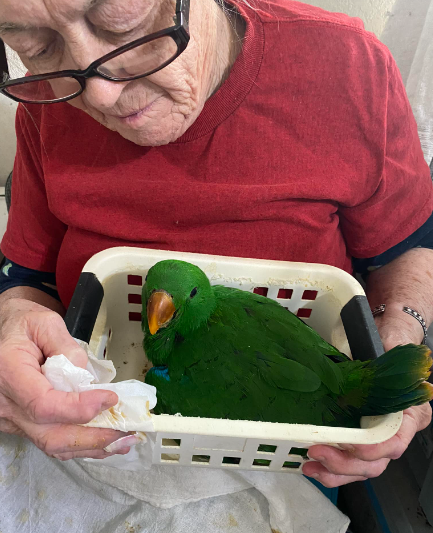
The main achievement was to decide very early to focus on one main species, Eclectus parrots. This focus involved studying them in-depth by keeping, breeding, and raising a large number of these birds along with maintaining records on their behavior and development. It also included visiting museum collections in order to recognize specific Eclectus subspecies in order to breed pure subspecies. I rather immediately discovered that those who had Eclectus parrots did not always know what subspecies they had in their aviaries.
Who was your mentor and why?
I have had several mentors. Anna Freidrickson was the one person who shared with me the information she had learned about breeding and raising Eclectus parrots at a time when these birds were extremely rare in the US and very little was known about them.
Dr. Brian Speer is a good friend who was instrumental in providing information about veterinary medical issues regarding parrots and who examined hundreds of my Eclectus. Dr. Luis Baptista was a good friend who provided access to the California Academy of Science and entre to the New York Museum of Natural History enabled me to spend days studying a large collection of Eclectus parrot specimens collected in the late 1800s and early 1900s from their lands of origin.
What changes have you witnessed relative to bird keeping? What is good and what is bad?
In the eighties and early nineties, there was a tremendous interest in the keeping and breeding of many different parrot species. There was an interest in learning HOW to incubate eggs, HOW to raise chicks, HOW to manage breeding pairs of different species, and HOW to maintain healthy birds in an excellent aviary situation. A lot of information was desired by many and shared by experienced individuals at national avicultural conferences and seminars. The agenda and the interest were all focused on very positive goals and shared interests, including raising funds for conservation projects and research projects on avian health, diseases, and behavior. Bird clubs were created where noted speakers were invited to share information. The general attitude was upbeat.
During the nineties, after the massive propaganda campaign put forward by the animal rights organizations ended up with the passing of the Wild Bird Conservation Act in October 1992, the attitude about exotic birds was mixed, with knowledgeable serious individuals who saw the need for breeding rare and common parrot species, and those who were against the keeping of exotic birds for any reason. By the late nineties there was the recognition that money could be made not only in raising birds but also in “rescuing” birds. This led to the birth of the rescue movement, which included the anti-breeder segment we see in action today, along with many pro-breeder rescue groups.
What is good is that there is a significant number of serious professional aviculturists who love birds and work to propagate them, to inform others about exotic birds, to work on conservation projects, and to work together to fight for the rights of others to keep and breed exotic birds.
This is very important because these people understand that preventing extinction of species requires using all the tools in the toolbox, which includes protecting habitat, conserving species in the wild and breeding species in aviary facilities. What is bad is that there is a significant number of serious dedicated individuals and organizations that are working to restrict, regulate and eliminate the keeping and breeding of exotic birds. These are the animal rights organizations who believe it is better that birds go extinct than be bred by humans. Their propaganda has been accepted and promoted by many in the rescue movement. These animal rights groups have made legal inroads at the local, state and federal level regarding the keeping, breeding and sale of exotic birds in the USA and in other countries.
What advice can you give someone entering aviculture?
First, I would recommend that a person entering aviculture seek out the professional organizations and join them: American Federation of Aviculture, Avicultural Society of America, Organization of Professional Aviculturists and read their publications and attend their conferences. Second, the new aviculturist most likely has seen some birds which interested them. In order to learn the most about those birds, it would be good for that person to find several individuals who have spent years working successfully with that species and study their methods of keeping and breeding those birds.
Lastly, I believe that the most important tool that this new aviculturist needs to develop as a skill is OBSERVATION of the birds. Observation requires careful attention to small details of the bird’s appearance and behavior. It must be noted that making assumptions about the meaning of behavior is not a good idea, especially making assumptions that would be relevant for human or animal behavior, since birds are quite different. Keeping notes can be quite helpful in all of the above activities.
Here is a link to Laurella Desborough’s website:
https://eclectusparrotcentre.com/


